


GoShare: Drive, Deliver, Earn
3.7859.00 Reviews
App Specs
- Version
- 2.20.9
- Updated On
- License
- Free
- Downloads
- 100,000+
- Developer
- GoShare Inc.
- Categories
- Business
- Platform
- Android
Screenshots
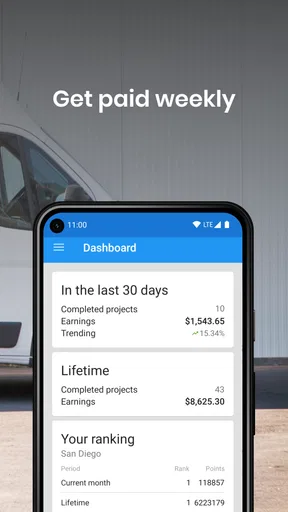
 Analysis by AppCompare
GoShare: Drive, Deliver, Earn is a business app from GoShare Inc. built around a simple idea: connect people who have suitable vehicles with delivery work. I approached it less like a casual side-income app and more like a tool that could affect my schedule, vehicle use, and personal information. That distinction matters. The useful question is not only whether it can help someone find driving work, but also whether the app gives enough clarity and control for a driver to make sensible decisions.
In my experience, the appeal is easy to understand. Someone with a pickup truck, cargo van, box truck, SUV, or car may want to turn unused driving time into paid work. The app is free, aimed at an Everyone audience, and belongs in the Business category rather than entertainment or general navigation. It has been available since February 11, 2016, and its current version is 2.20.9, with Android support from version 6.0 onward.
My main takeaway is that GoShare is best treated as a work opportunity tool, not as a guaranteed income source. It may suit a driver who already has an appropriate vehicle and is comfortable reviewing each job carefully. It is a weaker fit for someone who expects predictable daily earnings, dislikes location-based work, or wants a fully transparent picture of every practical obligation before creating an account.
What using GoShare means in everyday life
The most realistic way to understand this app is to picture a normal weekday. I might already have a pickup truck, a free afternoon, and a reason to be in the same general area as a delivery request. Instead of searching broadly for odd jobs, I could use GoShare to look for available work that matches my vehicle and schedule. The value comes from bringing those pieces together in one place.
That convenience has a trade-off. A delivery is not just a line on a screen. It can involve loading, waiting, parking, traffic, fuel, vehicle wear, and the possibility that the route takes me farther from home than expected. I would not judge an opportunity by its apparent payment alone. I would consider the full time involved, the distance to the starting point, the return journey, and whether the vehicle is genuinely suited to the items involved.
This is where the app’s focus on several vehicle types becomes important. A cargo van or box truck may be sensible for one kind of job, while an SUV or car may be more practical for another. Having a qualifying vehicle does not automatically mean every request is a good match. The responsible workflow is to check the vehicle requirement, estimate the total time, and decide whether the work fits my day before accepting anything.
I also see a difference between using GoShare occasionally and depending on it as a primary job source. Occasional use can be relatively straightforward: open the app when I have availability, inspect suitable opportunities, and decline anything that does not make sense. Full-time reliance demands more planning because demand, travel, expenses, and personal availability can change. The app may help organize opportunities, but it does not remove the business decisions that come with driving for income.
Worth Reading Before You Choose

EA SPORTS FC Mobile 26 Is a Bigger Football Game, but It Takes Time

Flipboard Shows What News Apps Must Do Beyond the Feed

Switching to Android Auto Means Rethinking Your Driving Routine

Google Calendar Makes a Crowded Week Easier to Manage

Ludo King Makes the Most of the Minutes Between Plans

Baby Panda World Brings Quick Play to Modern Phones, but Its Game Library Feels Busy
Who is likely to get the most from it
I would recommend trying GoShare first to people who already own a vehicle that fits the work, are comfortable driving in unfamiliar areas, and can handle practical tasks around deliveries. It is particularly relevant to someone who wants flexibility rather than a fixed shift. A driver with a quiet morning, a free weekend, or a gap between other commitments may find that model more useful than someone seeking a guaranteed timetable.
It can also appeal to a small operator who wants to test whether local delivery work is worth pursuing before building a separate customer base. The app gives that person a place to explore the type of work available without immediately creating a standalone delivery business. I would still treat the first few jobs as a learning period, paying attention to time, fuel, loading difficulty, and how much effort remains after the delivery is complete.
On the other hand, I would not choose it for someone without a suitable vehicle, someone who cannot tolerate variable schedules, or someone who wants earnings that are easy to forecast. It is also not an ideal answer for a driver who dislikes dealing with physical items or who has limited flexibility when a pickup takes longer than planned. A traditional scheduled job may be a better alternative in those cases, even if it offers less freedom.
Where it differs from ordinary alternatives
The usual alternative is to search for local delivery work independently, respond to classified listings, or build relationships directly with businesses and customers. That approach can offer more control over which jobs I pursue, but it also requires finding the work, communicating with clients, and managing the process myself. GoShare’s attraction is the possibility of bringing the opportunity-searching step into a dedicated business app.
It is also different from a general driving platform. A service focused mainly on passenger trips is built around transporting people, while GoShare is intended for delivery work using vehicles that can handle different kinds of cargo. That changes the practical questions. I need to think about loading space, item handling, parking, and whether the vehicle is appropriate, not simply whether I can reach a passenger quickly.
Compared with starting a private courier service, GoShare may be less demanding at the beginning because I am not responsible for finding every customer myself. The trade-off is that I have less direct control over the opportunity pipeline and may need to accept the app’s way of presenting work and managing participation. For me, that makes it a useful complement to independent work rather than a complete replacement for it.
Trust starts with the account and permission choices
Because this is a work-oriented app, I would pay close attention during sign-up and setup. The important habit is to read each request for access instead of tapping through automatically. Location access, notifications, camera use, contact details, identity information, and vehicle-related information can all feel relevant in a delivery context, but relevance is not the same as permission I should grant without thinking.
I would choose the least intrusive option that still allows the app to perform the task I actually want. If location access is requested, I would consider whether it is needed while using the app or continuously. If notifications are optional, I would decide whether immediate job alerts are worth the interruption. These choices are not merely technical settings; they affect how much information and attention the app can use during my day.
I would also look for account controls that let me update personal details, manage notifications, review sign-in information, and leave the service if I no longer want to participate. A work app should not become difficult to disengage from. Before accepting jobs, I would make sure I understand how to pause my availability and how to contact support if an account or delivery issue occurs.
My trust standard here is deliberately practical: I want visible choices, understandable explanations, and a clear path to correct mistakes. I would not assume that an app is careless simply because it asks for information connected to delivery work, and I would not assume that every request is harmless simply because it appears during setup. The right response is to inspect the screen, grant only what makes sense, and revisit settings later.
Moments when personal data deserves extra attention
Delivery work naturally creates sensitive moments. An app may need enough information to identify a driver, coordinate a job, communicate about a pickup, or support a transaction. Those uses can be reasonable, but they place extra importance on what I share and where it appears. I would avoid entering unnecessary personal details into free-text fields and would be careful when sending photos or messages connected to a delivery.
Location deserves special attention because it can reveal routines, not just a single route. I would turn off location access when I am finished if continuous access is not necessary for my use, and I would review the operating system’s permission screen rather than relying only on an in-app switch. I would also consider whether notifications could expose job or account details on a locked screen.
Vehicle information can be sensitive in a different way. Details about the vehicle may be needed to match work, but I would still check every field before submitting it. I would avoid sharing registration or identifying documents outside the app’s intended verification flow, and I would confirm that I am using the official application before entering anything important. That small pause is worthwhile for any work platform.
Another useful habit is separating work communication from personal communication where possible. I would keep delivery-related messages inside the service if that is the available workflow, rather than moving conversations to unfamiliar channels simply because someone asks. If a request feels unrelated to the job, pressures me to disclose extra information, or asks for payment outside the normal process, I would stop and seek clarification before continuing.
How I would test the app cautiously
I would begin with a limited trial rather than reorganizing my entire week around it. After installing the free app, I would create the account carefully, inspect the permission prompts, and learn how availability and job information are presented. I would not accept the first opportunity automatically. I would compare the route, vehicle fit, time commitment, and practical workload with what I would earn after expenses.
For the first delivery, I would leave extra time for finding the pickup location and understanding the handoff process. I would keep my phone charged, make sure navigation is ready, and avoid promising a tight arrival window that leaves no room for traffic or loading delays. This is not a criticism of GoShare specifically; it is a sensible way to evaluate any platform where the real work happens away from the screen.
Afterward, I would record the details privately: time spent from leaving home to returning, fuel used, parking costs, physical effort, and whether the app’s description matched the actual task. That record is more useful than judging the experience from one successful or frustrating job. It also helps answer the question many new drivers have: whether the opportunity is worthwhile for their own vehicle and local routine.
I would pay attention to the app’s account controls during this trial as well. Can I make myself unavailable without confusion? Are notifications understandable? Can I find help when something goes wrong? Do I know which information is being used for the work? These are signs of a service that respects user agency, and they matter just as much as the basic ability to discover delivery opportunities.
Practical friction I would not ignore
The biggest limitation is variability. A flexible delivery marketplace can be useful precisely because it is not a fixed shift, but that also means I cannot assume that every opening in my schedule will produce suitable work. Even when an opportunity appears, the route or item requirements may make it unattractive after I count the real costs.
Vehicle suitability can create another source of friction. A car may be economical for some work but unsuitable for larger items, while a box truck may offer capacity at the cost of fuel and maneuverability. I would not stretch the vehicle beyond what is safe or sensible just to qualify for a job. The app can help match a vehicle category, but I remain responsible for judging whether the specific load and conditions are appropriate.
There is also a human side to delivery work that no interface can fully solve. A pickup may involve waiting, unclear instructions, difficult parking, or items that take longer to handle than expected. I would keep communication polite and document relevant details when necessary, especially if the condition of an item or the agreed task is unclear. A clean record protects my own understanding of what happened and makes support conversations easier.
Finally, I would remember that a free download is not the same as free work. Fuel, maintenance, insurance considerations, taxes, cleaning, and unpaid travel can all affect the result. GoShare costs nothing to install, but I would calculate the net value of each opportunity instead of treating the displayed earning as disposable income. That is one of the most important distinctions between trying the app and building a sustainable driving routine around it.
What the public response suggests, without treating it as a guarantee
GoShare has passed one hundred thousand installs and holds a 3.7 average from around 1.8 thousand ratings, with roughly 859 written reviews. Those figures show that the app has attracted a meaningful user base, but they should not be read as a promise about my own local experience. Delivery availability and support quality can feel very different depending on vehicle, area, timing, and the type of work I am willing to accept.
I would read written feedback looking for patterns rather than isolated praise or complaints. Comments about account setup, job clarity, communication, payment handling, or support are more useful to me than a simple star score. I would also check whether recent comments describe the current version, since an older experience may not reflect how version 2.20.9 behaves today.
The rating leaves room for a balanced conclusion. It is not a reason to dismiss the app, but it is also not a reason to install it with unrealistic expectations. I see it as a signal to test the workflow personally, protect my time, and keep control over permissions and availability while I decide whether it belongs in my working routine.
My cautious verdict for drivers and businesses
After looking at GoShare as both a delivery tool and an account-based service, I think it is worth considering for the right driver. The strongest case is someone who already owns a suitable vehicle, wants flexible delivery opportunities, and is prepared to evaluate each job like a small business decision. The free entry point makes a careful trial reasonable, provided I do not confuse access to the app with guaranteed work.
I would skip it if my main goal were stable hours, predictable income, or a job that never involves loading and handling items. I would also choose an alternative if I wanted complete control over customers and pricing, because independent courier work may provide that control even though it requires more effort to find and manage clients. For passenger-focused driving, a different category of service would naturally be a better match.
For anyone who does try it, my advice is simple: use a suitable vehicle, inspect every opportunity, calculate the full cost, and review permissions before sharing information. Keep availability under your control, avoid unnecessary communication outside the normal workflow, and treat the first few jobs as evidence-gathering rather than proof of a new career.
GoShare: Drive, Deliver, Earn is a focused option for exploring vehicle-based delivery work, especially when flexibility matters more than certainty. I would recommend it as a cautious experiment for prepared drivers, not as a promise of effortless earnings. Its real value depends on the match between the available work, my vehicle, my local routine, and my willingness to manage the practical details that happen beyond the app.
Pros
- Flexible driving and delivery opportunities in one app.
- Easy access to available trips through a simple mobile interface.
- Potential to earn extra income using your own vehicle.
- Useful for drivers seeking short
- local assignments.
- Trip details and earnings are shown before accepting jobs.
Cons
- Availability of jobs can vary significantly by location and time.
- Vehicle costs
- fuel
- and maintenance reduce your actual earnings.
- Some assignments may involve long waits or inconvenient pickup points.
- Earnings depend on demand and may not be consistent each week.
- Drivers may need to meet specific vehicle and eligibility requirements.
FAQs for GoShare: Drive, Deliver, Earn
What is GoShare: Drive, Deliver, Earn, and how does it work?
GoShare is a platform that connects customers who need help moving, delivering, or transporting items with local drivers and delivery professionals. Depending on your location and vehicle, you may be able to request a delivery, schedule assistance for larger items, or sign up to earn money by completing jobs. Available services, booking options, and driver opportunities can vary by city.
Can anyone become a GoShare driver or delivery professional?
Not everyone is automatically eligible to work through GoShare. Applicants generally need to meet requirements related to age, driving history, identity verification, insurance, vehicle condition, and background screening. The type of vehicle you own may also determine which jobs you can accept. Requirements can change by location, so review the current application criteria before downloading the app solely to earn money.
How much money can drivers earn with GoShare?
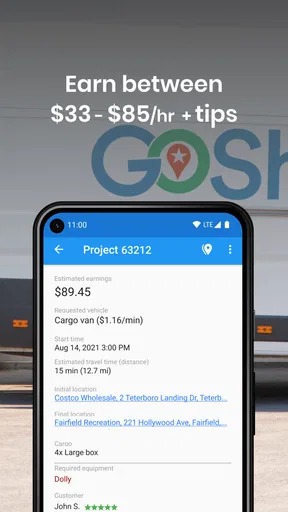
Earnings depend on several factors, including the type of vehicle you use, the distance and complexity of each job, local demand, customer tips, and how many deliveries you accept. GoShare may display estimated compensation before a job is accepted, but earnings are not guaranteed. Fuel, maintenance, taxes, insurance, and other work-related expenses can reduce your actual take-home income.
What kinds of items and delivery services can customers request?
GoShare is designed for a range of transportation and delivery needs, such as moving furniture, picking up large purchases, transporting bulky items, and completing local delivery jobs. Service availability depends on the area, vehicle capacity, item size, and driver availability. Customers should provide accurate item details, dimensions, pickup information, and any special handling requirements when placing a request.
Is GoShare safe to use, and what should I know about payments and support?
GoShare typically uses account verification, job details, in-app communication, and digital payment features to organize transactions between customers and professionals. However, users should still confirm pickup details, inspect items, and communicate clearly about access or handling concerns. Before booking or accepting work, check the app’s current policies regarding cancellations, insurance, damage claims, tips, refunds, and customer support.


